100 million PLN from the National Recovery and Resilience Plan (KPO) for major investments in green spaces and energy-efficient transformation!
Krakow University of Technology has secured nearly PLN 100 million for 5 projects aimed at the green and energy-efficient transformation of its campuses as well as its teaching and laboratory buildings. Thanks to funding from the “Investments for the Green Transformation of Cities” instrument under the National Recovery and Resilience Plan, the university’s main campus on Warszawska Street in the centre of Krakow and the PK Student Housing Estate in Czyżyny will undergo a complete revitalization. These areas will gain nearly 100,000 new plants and perennials, 35,000 new shrubs, and 250 new trees, as well as water retention systems and energy monitoring and conservation systems.
This is the second such substantial injection of EU funding for the PK Krakow University of Technology in recent weeks. At the end of February, the university secured over 250 million zlotys for its digital transformation. It is now receiving funding for investments in green spaces and energy-efficient, environmentally friendly infrastructure.
– The green transition is the second strategic area of development for the Kraków University of Technology, alongside the digital transition. Thanks to further funding from the National Recovery Plan, we will invest in academic spaces that are more people- and environment-friendly. The scale of our activities will have positive effects not only for our students and staff, but for the whole of Kraków and its residents,” emphasises the Rector of PK Krakow University of Technology, Prof. Andrzej Szarata. – Through a vast number of new plantings, investments in energy-efficient systems and lighting, and the thermal modernisation of further buildings, we will contribute to improving air quality, reducing the urban heat island effect, and increasing urban biodiversity and the use of rainwater. These measures are in line with our vision of the PK Krakow University of Technology as a ‘green university’ that cares for the natural environment just as much as it does for technological progress.
As the Rector of PK KUT emphasises, such a significant capital injection from a loan under the National Reconstruction Plan (KPO) on favourable terms (a 20-year repayment period, with interest rates of 0% and 1%) will enable the university to implement the projects outlined in its development plans – which were originally scheduled to be spread over a longer period – much more quickly. – We had been preparing for some time to secure funding on such a large scale – such as that for digitalisation and the green transition – primarily by drawing up a long-term investment plan for the PK Krakow University of Technology. In this plan, we identified and prioritised the investments most crucial to the university’s development over a 10-year period. As a result, we were the first university in Poland to be ready for partnership-based negotiations and a detailed audit by banking institutions, which confirmed our strong financial position and readiness to undertake major investment projects,” notes the Rector of the PK KUT.

Green campus in the heart of the city
In total, for the five projects to be supported by the ‘Investments for the Green Transformation of Cities’ programme under the National Reconstruction Plan (KPO), the PK Krakow University of Technology has secured exactly 99,184,971.59 PLN. The university will allocate over PLN 49 million to its largest project – the regeneration of the historic campus on Warszawska Street in Kraków and the green development of the Student Housing Estate in Czyżyny, Kraków.
The regeneration of the campus at 24 Warszawska Street is a comprehensive project that will increase the amount of green space and biologically active areas in the centre of Kraków, and, above all, improve the environmental quality, appearance and functionality of the entire space. It will involve restoring the historic layout of the former Austrian barracks, reinterpreting the transport network by prioritising pedestrian and cycle traffic, and assigning new functions to the space – educational and research-related, but also recreational, promoting health-enhancing activities and social integration.
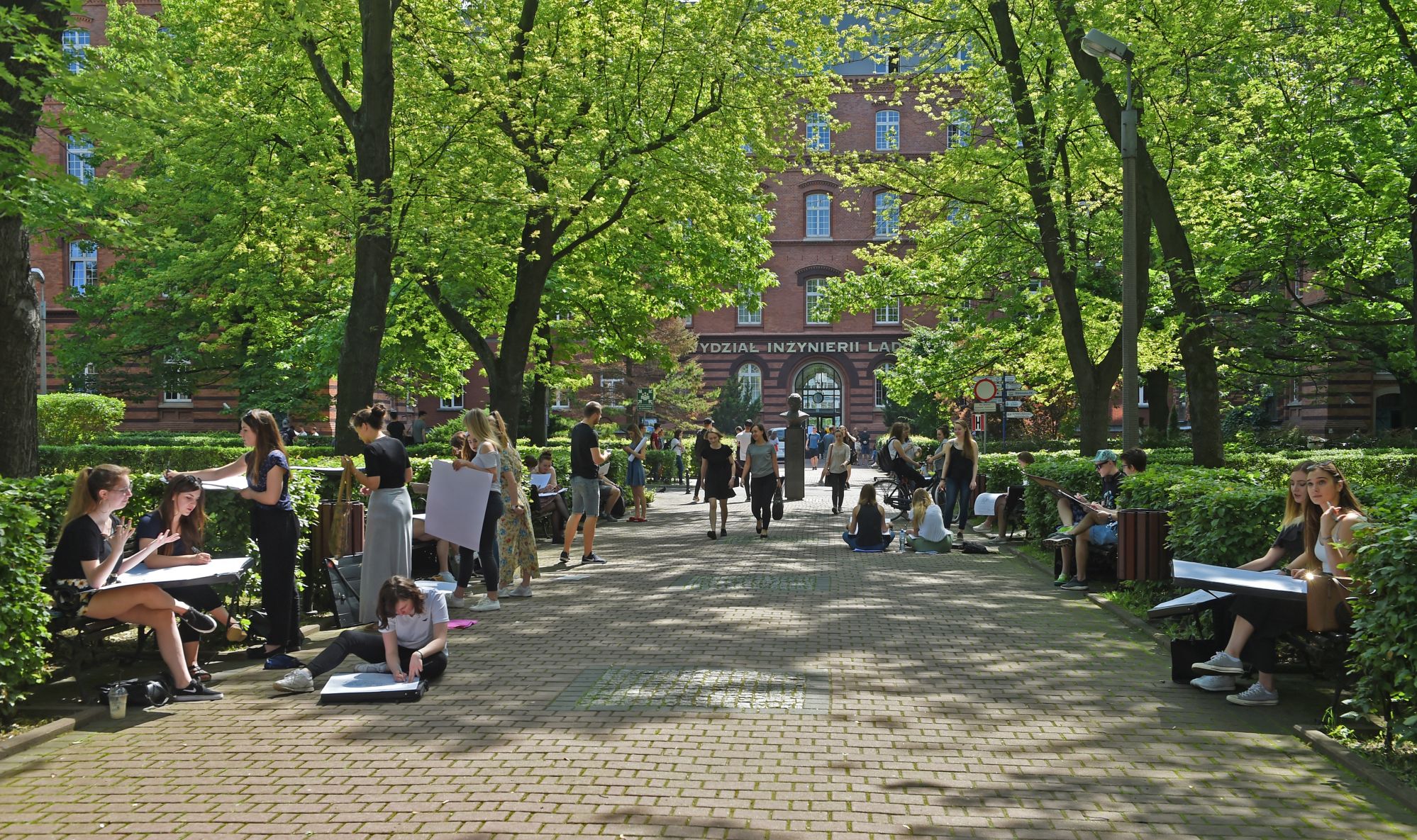
The layout of roads and paths will be redesigned to make them more convenient, more accessible to all users, and better suited to the historic character of the site. The materials used in the redesign of the transportation network will be natural and partially permeable, which will allow for better utilization of stormwater and free up space for newly landscaped greenery—including new trees, shrubs, and perennials. – On the university’s main campus, we will plant over 200 new trees, more than 30,000 shrubs, and as many as 78,000 other plants, most of which will be nectar-producing. We will also care for the existing trees and shrubs, improving the conditions for their continued growth. This will create more diverse, welcoming, and natural spaces that encourage relaxation and connection with nature,” says University Chancellor Agnieszka Kostecka-Stec.
The water and electrical systems will be modernised. Among other things, a rainwater management system will be installed, which will reduce the amount of rainwater entering the sewerage system and enable it to be managed more efficiently through the creation of rain gardens and other retention systems based on so-called nature-based solutions. The campus will also feature energy-efficient lighting and charging points for vehicles powered by renewable energy, and there will be more bicycle racks. New telecommunications solutions, including CCTV and information systems, will improve safety and make it easier for people with disabilities to get around.
The whole area will be complemented by new places to relax – benches, shelters, drinking fountains and cosy green corners for quiet study. The campus will become more open, greener and more functional, encouraging students to make active use of the space and spend time outdoors every day.
More green spaces and places for active leisure for students in Czyżyny
In Czyżyny, students will gain new spaces for rest and recreation amidst a completely transformed green environment. Work on the redevelopment of the areas around the PK Krakow University of Technology’s halls of residence has already begun. Small-scale architectural features (made from natural, sustainable materials) are currently being installed: benches, picnic tables, sun loungers, utility shelters and drinking fountains. The planting of new vegetation has also begun. – In the Student Housing Estate, we will plant over 40 new trees, nearly 5,000 shrubs and almost 20,000 other plants. There will be perennial borders and flower meadows featuring native, honey-producing and biocenotic plant species, which will enhance the range of ecosystem services. We are also already preparing to refurbish the multi-purpose sports pitch with drainage and a new surface to replace the current concrete one, as well as energy-efficient lighting,” explains Agnieszka Kostecka Stec.
As a result, the PK KUT Student Housing Estate will gain multifunctional, open public spaces that encourage active use. The ecological value of the green spaces here will be enhanced – thanks to the use of native plants that produce nectar and fruit, which also provide food for birds and create shelter for animals living in the city.
Energy-efficient lighting and measures to prevent heat loss mean real savings for the university
As part of the four remaining projects, funded by an EU loan totalling a further 49 million zlotys, the Kraków University of Technology will carry out thermal modernisation work, install renewable energy systems and completely replace the lighting in over 20 buildings. “This will bring environmental benefits, but also significant financial savings on the bills we pay for electricity and other utilities,” notes Rector Andrzej Szarata.
The university will allocate a total of over 35.1 million zlotys for the thermal modernisation of the buildings of the Faculty of Mechanical Engineering and the Faculty of Architecture, the ‘Kotłownia’ Conference and Exhibition Pavilion, Hall of Residence No. 3 in Czyżyny and the ‘Stara Polana’ conference centre, as well as for renewable energy installations. The replacement of lighting with energy-efficient systems in 19 buildings will cost a further 14.3 million zlotys.
This is not the end of thePK KUT’s ambitious development plans. “We will soon be announcing details of further investments included in our long-term plan. These relate, amongst other things, to our vision of further transforming the university’s largest campus in Czyżyny into a hub for technological and social innovation,” announces Rector Andrzej Szarata.
(mas)
In the photos:
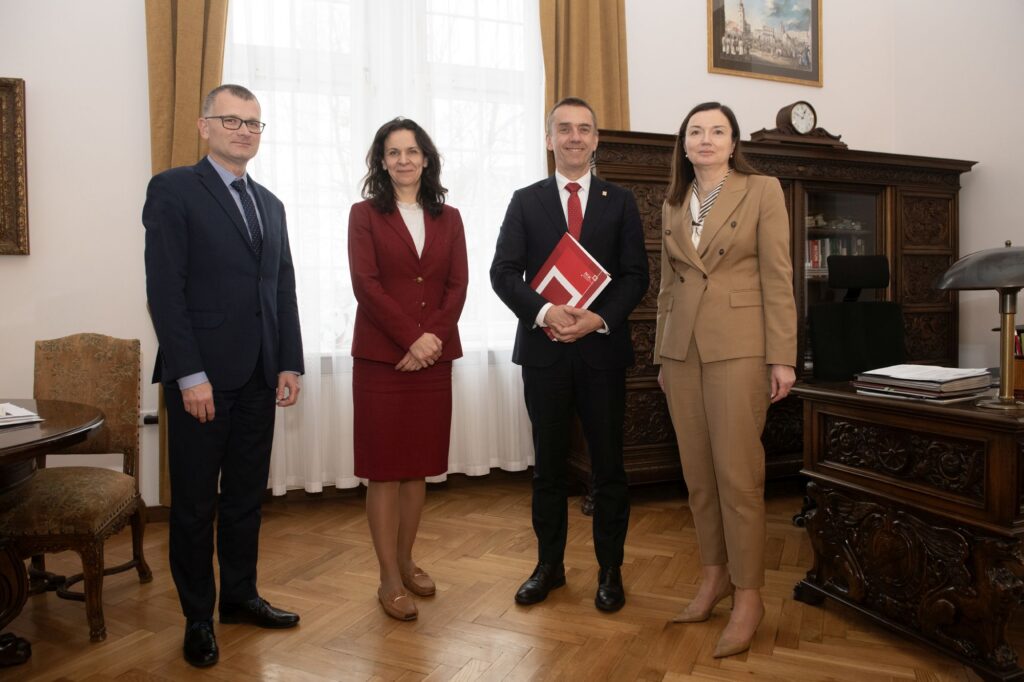
1. Signing of agreements between Krakow University of Technology and Bank Gospodarstwa Krajowego, from left: Bogumił Rusnak, Relationship Expert at Bank Gospodarstwa Krajowego, Małopolska Region; Agnieszka Kostecka-Stec, Chancellor of Krakow University of Technology; Prof. Andrzej Szarata, Rector of Krakow University of Technology; and Renata Deptała, Director of the Małopolska Region at BGK / Photo: Jan Zych
2. The university’s Main Campus will undergo a green transformation / Photo: Jan Zych