Inauguration of Cooperation between PK KUT and the Joint Research Centre of the European Commission
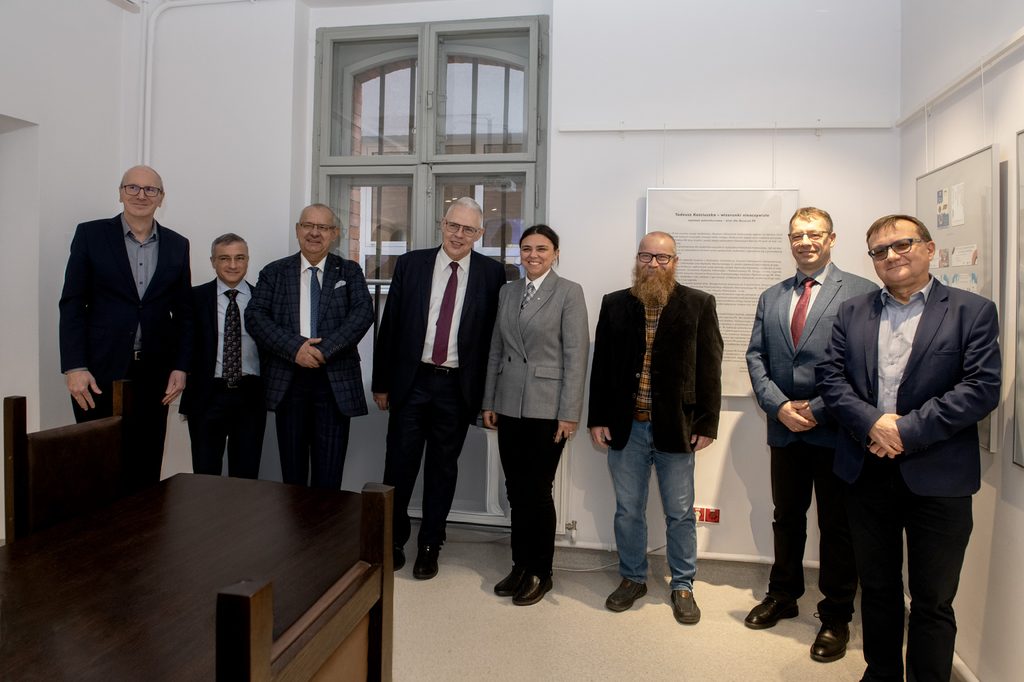
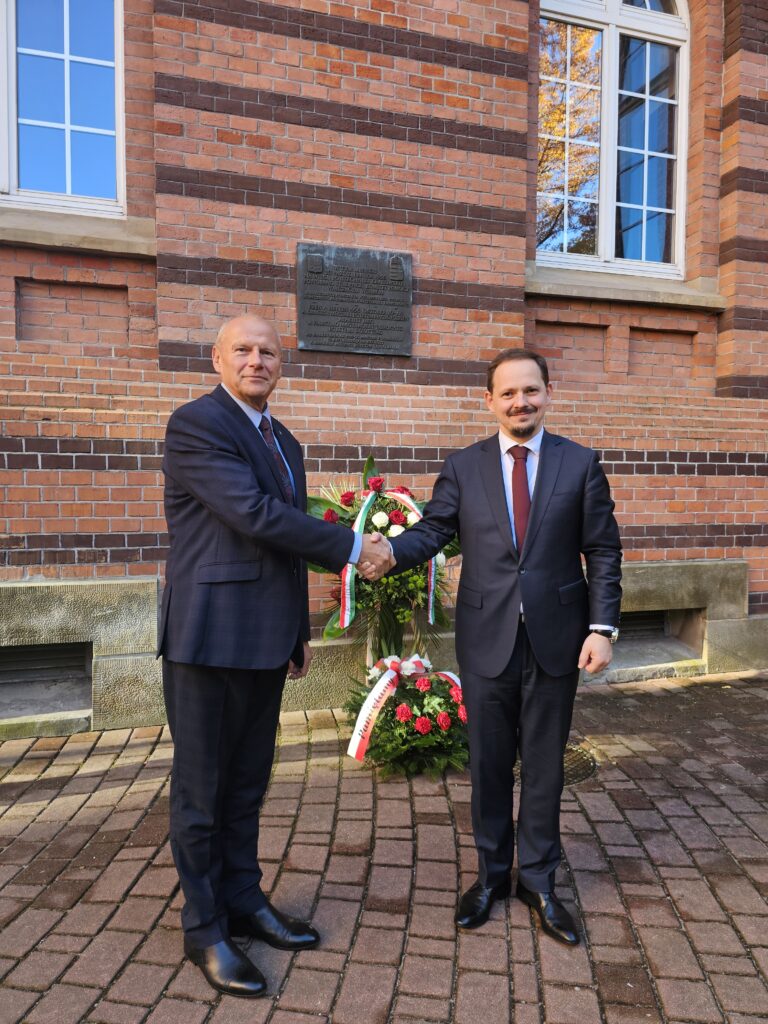
PK KUT and the Joint Research Centre of the European Commission (JRC) have officially launched their cooperation. The agreement establishing this partnership was signed in July 2025. The historical significance of the inauguration was highlighted by a unique event — before the meeting began, participants viewed an original 1792 letter written and signed by Tadeusz Kościuszko, the patron of the University, presented at the PK KUT Museum. The meeting between representatives of CUT and JRC combined heritage with modern technology, setting the course for joint initiatives spanning science, industry, and international policy.
PK KUT was represented by, among others, its Rector, Prof. Andrzej Szarata, as well as Piotr Bielaczyc, PhD, Professor at KUT and coordinator of the agreement on behalf of the University, along with representatives of the faculties involved in the cooperation. JRC was represented by Dr Piotr Szymański, Director of the Directorate for Energy, Mobility and Climate, Dr Giorgio Martini, Head of Unit at the JRC site in Ispra, Italy, and Dr Marek Bielewski from the JRC site in Petten, the Netherlands. The primary objective of the meeting was to officially inaugurate the collaboration between JRC and PK KUT aimed, among others, at strengthening links between industry and education, as well as between science and international policy.
The meeting was opened by Prof. Magdalena Niemczewska-Wójcik, Vice-Rector for Science at PK KUT, who emphasised the importance of operating at the intersection of science, policy, and the economy. She also highlighted Kraków and the role of Małopolska region as a hub of dynamic technological development. This was followed by a presentation by Bogdan Szybiński, DSc Eng., Prof. at PK KUT and Vice-Dean for General Affairs and International Cooperation at the Faculty of Mechanical Engineering, who outlined the history, profile, and key achievements of the University.
Subsequently, selected faculties presented their activities. Katarzyna Matras-Postołek, D.Sc. Eng., Professor at PK KUT, introduced the profile of the Faculty of Chemical Engineering and Technology, focusing on research in nanotechnology and innovative cosmetic formulations. Prof. Arkadiusz Kwiecień (Faculty of Civil Engineering) discussed, among other topics, the use of flexible polyurethane joints in the seismic protection of buildings. The work of the Interdisciplinary Centre for Circular Economy was presented by Prof. Krzysztof Pielichowski. Prof. Marek S. Kozień, Dean of the Faculty of Mechanical Engineering, also actively contributed to the discussions.
Director Dr Piotr Szymański underlined that interdisciplinarity and the popularisation of science are key areas of interest for the JRC. He also praised PK KUT’s strong emphasis on education in English, viewing it as an opportunity to attract international scientific talent to Poland. “Interdisciplinarity represents a crucial yet complex domain. Equally important is the popularisation of science, which sparks interest in society and among young people, ensuring continuity between generations. Both elements are priorities for the Joint Research Centre,” said Director Szymański.
Dr Giorgio Martini, Head of Sustainable, Smart and Safe Mobility at the JRC, presented developments in electromobility, including wireless AI-integrated charging, the integration of batteries with renewable energy sources and smart grids, as well as hydrogen-fuelled combustion engines and their environmental impact. Dr Marek Bielewski outlined JRC’s activities focused on battery performance and durability testing and its support for legislative processes.
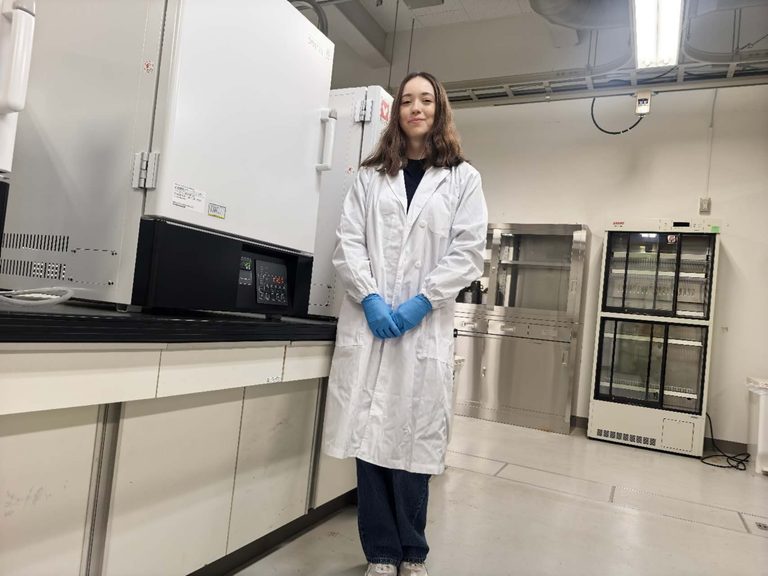
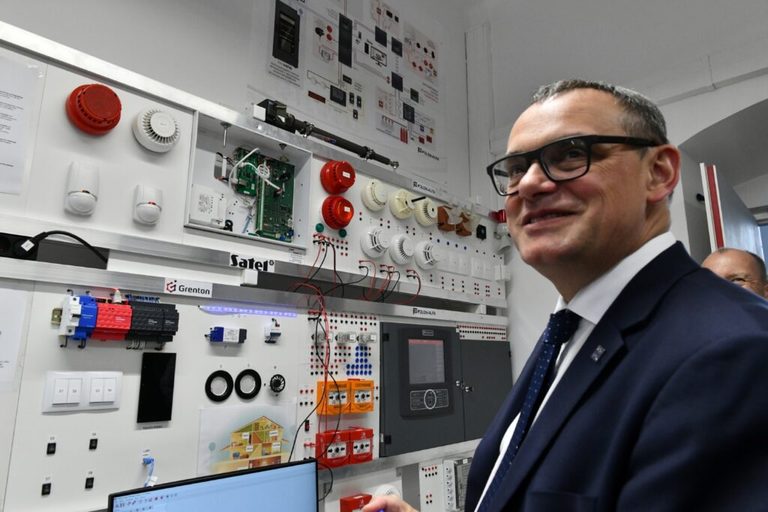
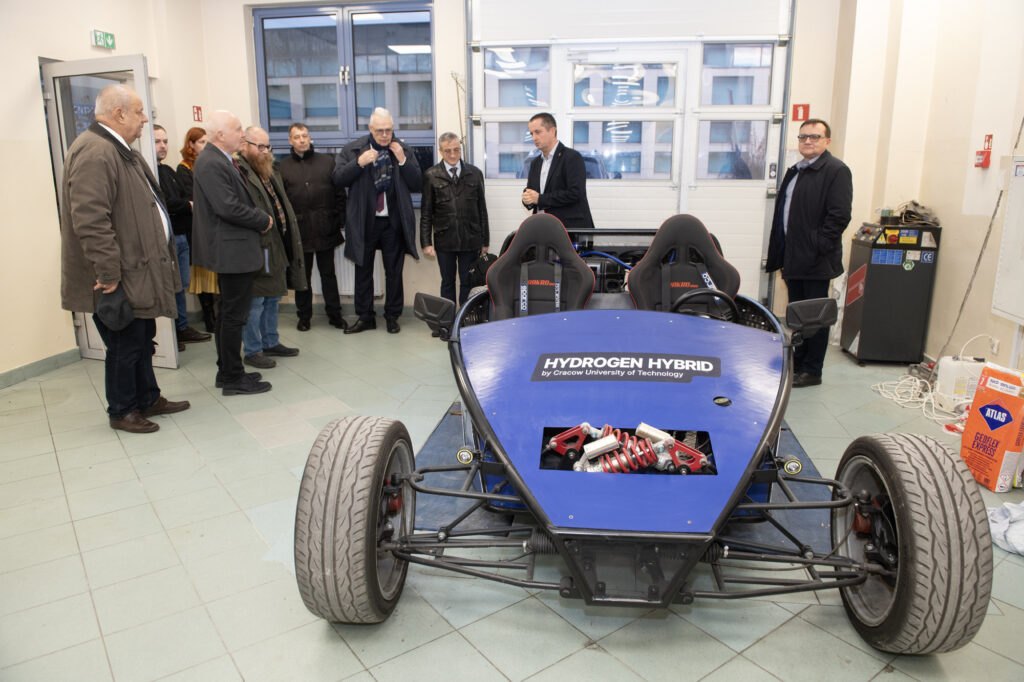
The delegation then toured PK KUT’s laboratories, including those of the Faculty of Chemical Engineering and Technology; the Faculty of Mechanical Engineering — where they viewed a hydrogen engine developed under the supervision of Prof. Marek Brzeżański; the Ultra-Precise Coordinate Measurement Laboratory — where discussions concerned research on electric vehicle batteries carried out in cooperation with the JRC laboratory in Petten; and the Environmental Aerodynamics Laboratory. The visitors also expressed interest in the potential use of PK KUT’s facilities for research on autonomous vehicles.
The meeting concluded with a discussion on strengthening relations between the institutions and outlining future directions of cooperation. “The JRC is the most important R&D centre in Europe. Through this collaboration, we will have a real impact on the EU’s development policies and on our country’s economy. Our agreement is a unique opportunity for the development of the automotive sector and sustainable transport. Kraków and the Małopolska region will also benefit, reinforcing their position as a ‘Silicon Valley’ for European technology companies,” summarised Prof. Piotr Bielaczyc.
In the days preceding the meeting at PK KUT, representatives of the JRC also visited two leading Polish institutions collaborating with the University — the Maria Skłodowska-Curie National Research Institute of Oncology in Gliwice, and the Automotive Research and Development Institute BOSMAL in Bielsko-Biała — where they became acquainted with their work and toured their state-of-the-art laboratories.
Translated by Marcin Bielowicz