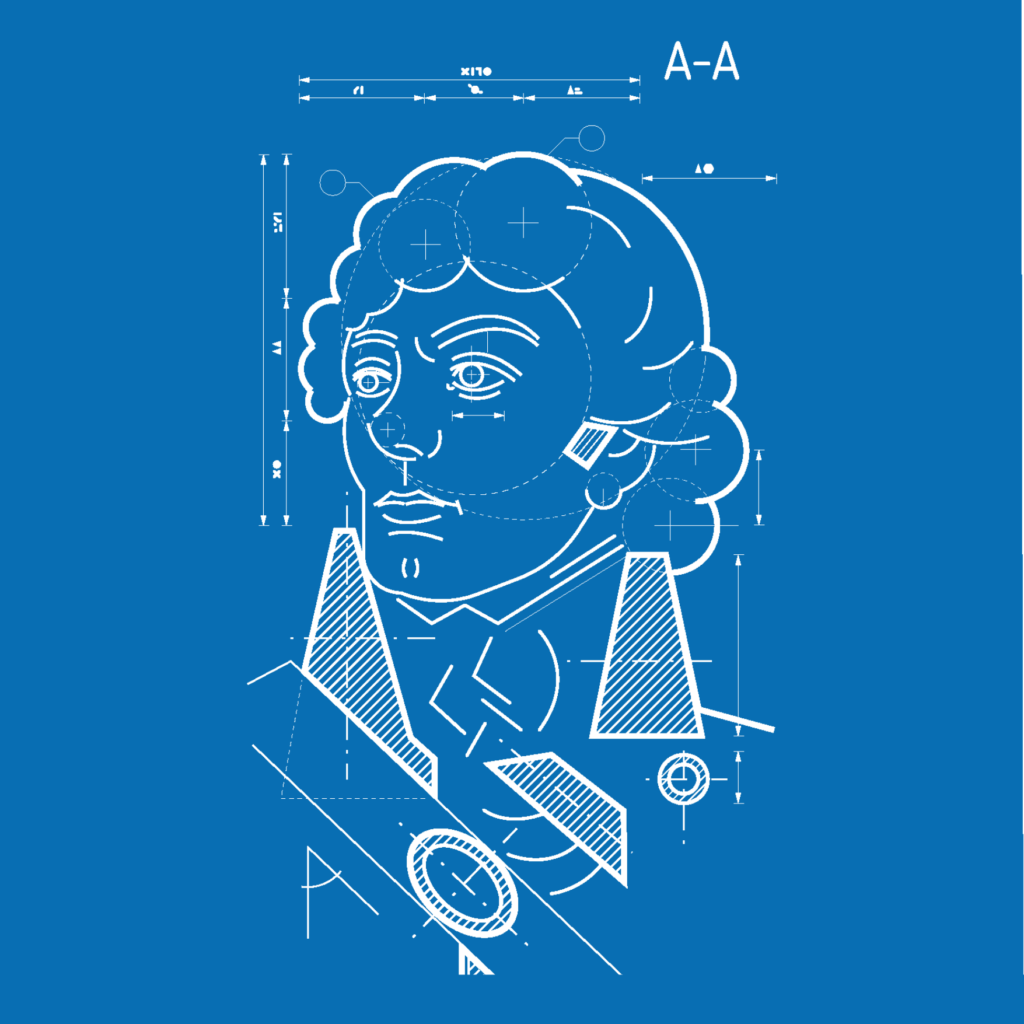
Tadeusz Kościuszko is inscribed as a hero in the history of two nations – Polish and American. He was an outstanding commander and an even better fortification engineer. Thomas Jefferson, the third President of the United States and one of the founding fathers of that country, said of him: The purest son of liberty I have ever known.
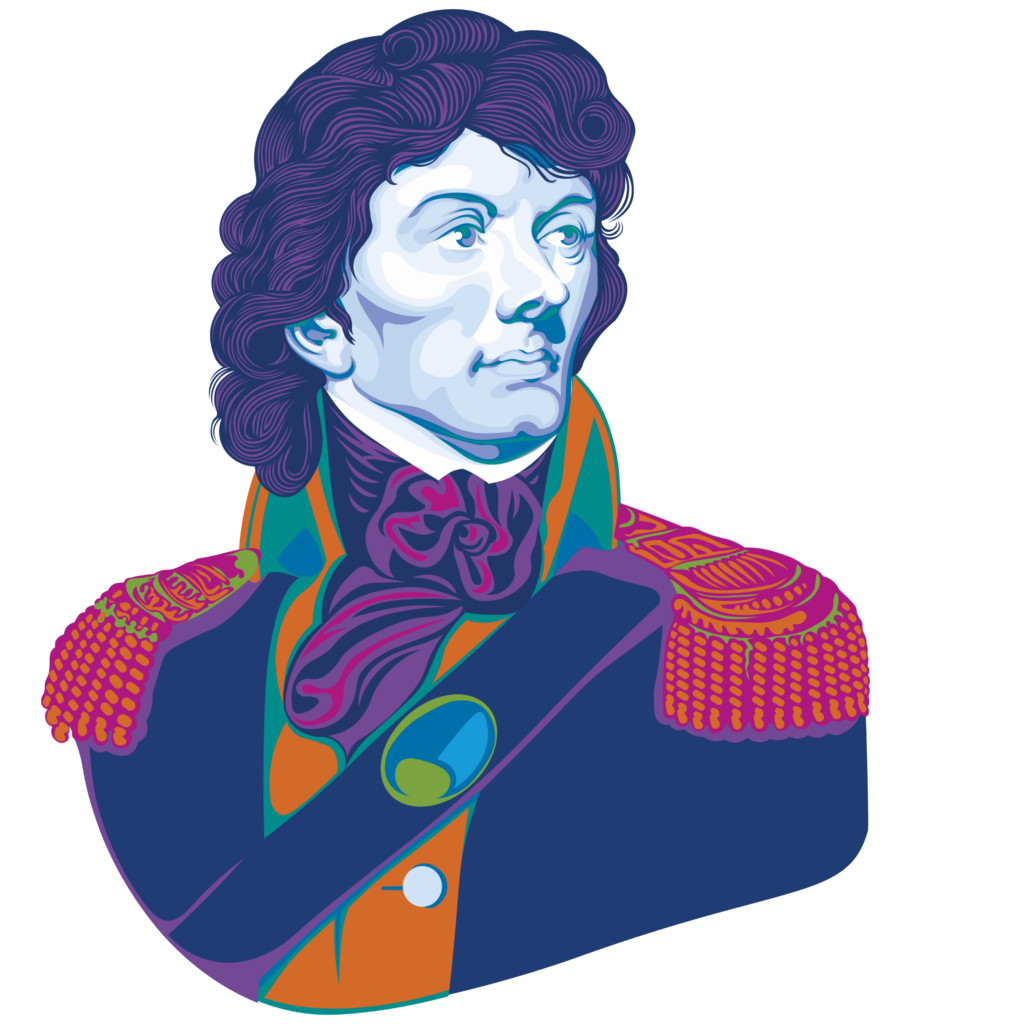
Andrzej Tadeusz Bonawentura Kościuszko was born on February 4, 1746, in Mereczowszczyzna in Polesia. In 1765, thanks to the support of the Czartoryski family, he began his studies at the Corps of Cadets of the Knight’s Academy. In addition to military training, he acquired a thorough humanistic education there. After completing school, he traveled to France, where he developed his engineering and military knowledge. His five-year stay in Paris solidified his conviction regarding the importance of freedom and human rights.
In 1776, Kościuszko traveled to America to take part in the war for the independence of the United States. As an engineer, he designed and built fortifications, including those at Ticonderoga and West Point. His skills contributed to the American victory at Saratoga, and General George Washington entrusted him with the construction of the fortifications at West Point. For his service, Kościuszko was promoted to the rank of brigadier general.
In 1784, he returned to Poland. During the Polish-Russian War in 1792, he distinguished himself in the battles of Zieleńce, Włodzimierz, and Dubienka. He received the Order of Virtuti Militari and was promoted to lieutenant general. After King Stanisław August Poniatowski’s accession to the Targowica Confederation and the collapse of the war, Kościuszko went into exile.
On March 24, 1794, in Kraków’s Main Square, he proclaimed the act of insurrection and became Supreme Commander of the National Armed Forces. The victory at Racławice was one of the first successes of the insurrection. Kościuszko sought to engage all social classes in the struggle. In the Połaniec Proclamation, he limited the serfdom of peasants and granted them greater legal protection. A Jewish unit under Berek Joselewicz also participated in the insurrection.
After the defeat at Maciejowice in October 1794, Kościuszko was taken into Russian captivity. After his release, he went into exile, first to the United States and later to France. He did not support linking hopes for Poland’s regaining of independence with Napoleon. He spent the last years of his life in Solothurn, Switzerland, where he died on October 15, 1817.
I will not fight for the nobility alone. I want freedom for the entire nation, and only for that will I stake my own life.
Kościuszko was ahead of his era in thinking about freedom and equality. He was an opponent of slavery and designated his American estate for the liberation and education of Black people. He also supported the rights of the indigenous inhabitants of America.
Today, his name is borne by institutions and places throughout the world. He has been the patron of PK Krakow University of Technology since 1976, and his name has been given, among others, to the highest peak in Australia. In Kraków, the memory of the Commander is commemorated by Kościuszko Mound, the monument on Wawel, and other places associated with his life and legacy.
Tadeusz Kościuszko remains a symbol of the struggle for independence, freedom, and human rights – values that transcended the era in which he lived.