Laboratory of Building Vibrations
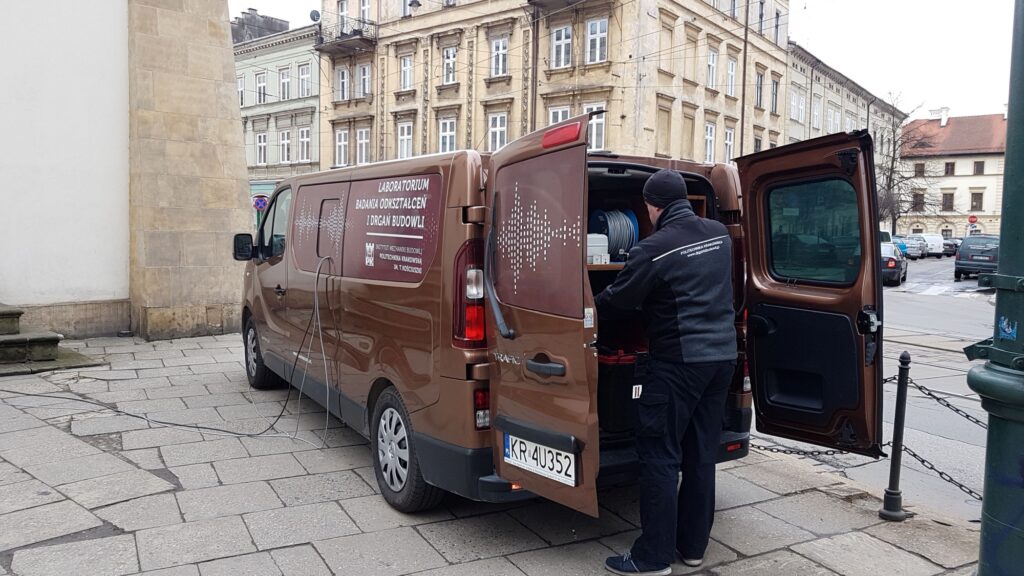
The Accredited Laboratory possesses specialized measurement equipment for recording and analyzing mechanical vibrations, as well as highly qualified specialist staff, among whom are authors of Polish standards.
The most frequently conducted tests include:
• experimental determination of dynamic characteristics of building
structures,
• determination of vibration parameters of building structures during the action
of various loads on these structures,
• studies of vibration propagation in the ground,
• measurements related to the assessment of the impact of vibrations on building structures
(including historic structures),
• measurements related to the assessment of the impact of vibrations on people in buildings.
Thermal Engineering Laboratory
In 2021, the Laboratory was entered into the NANDO database (New Approach Notified and Designated Organisation) following authorization granted by the Chief Building Supervision Inspector, becoming a European Notified Body no. 2919.
Objects: products, materials, building structures
Fields of testing:
• A/5 – Acoustic testing of construction products, building structures,
• J/5 – Mechanical testing of construction products, building structures,
• N/5 – Testing of physical properties of construction products, building structures.
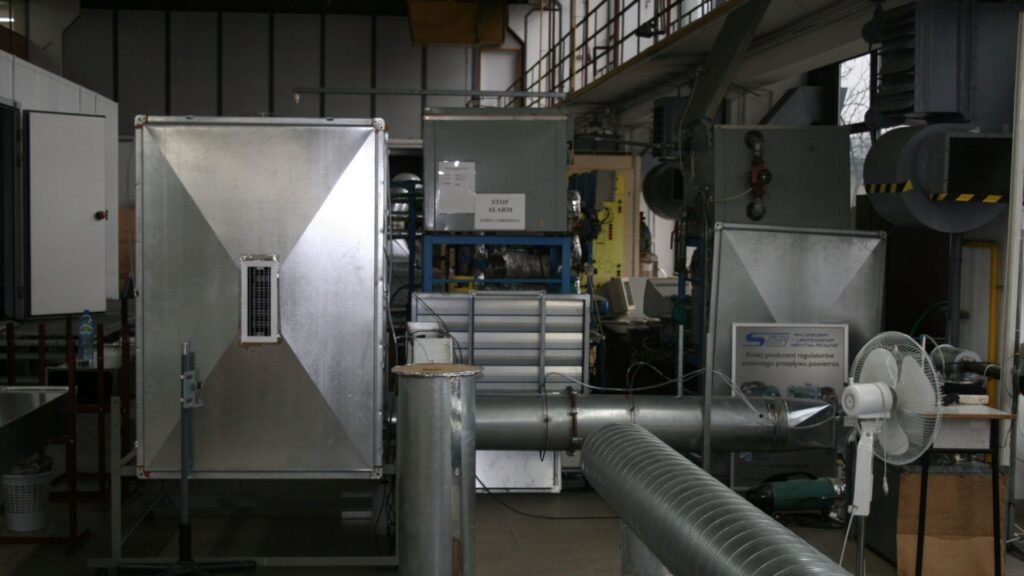
The laboratory specializes in testing vertical and roof windows together with accessories such as blinds, shutters, and performs testing of a wide range of air conditioning installation equipment with air treatment devices, air handling units, heat recovery units, ducts, diffusers, and fans.
Trace Analysis Laboratory
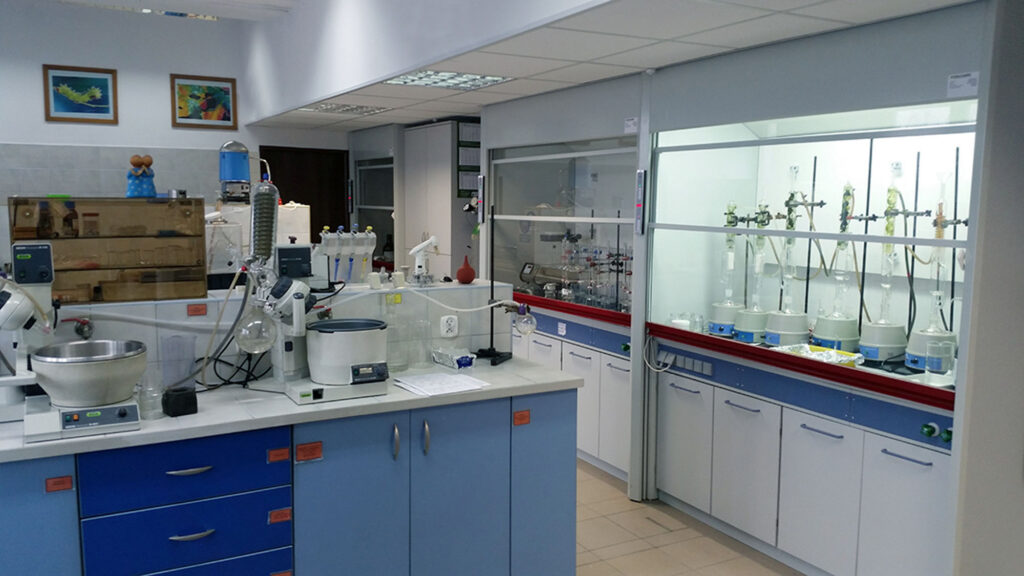
The Laboratory is equipped with three GC-MS/MS mass spectrometry systems – including modern TSQ 8000 EVO Triple Quadrupole GC-MS/MS equipment and the TSQ9000 Triple Quadrupole GC-MS/MS launched in May 2023, allowing for great flexibility in conducted research and guaranteeing clients timely testing.
The Laboratory specializes in determining the content of dioxins and furans (PCDD/PCDF) as well as dioxin-like biphenyls (dl-PCB) and non-dioxin-like biphenyls (ndl-PCB) in food products, feed, industrial products, and environmental and biological samples. It also performs testing in the field of emissions of these compounds from thermal processes. It also determines polybrominated diphenyl ethers (PBDE), compounds from the group of polycyclic aromatic hydrocarbons, and chlorobenzenes.
Since 1996, LAŚ staff have participated in international proficiency testing programs, and since 2005 LAŚ has been a member of POLLAB with registration number 700.
Building Materials and Structures Research Laboratory
The Laboratory holds a PCA accreditation certificate covering nearly 40 testing methods. The manner of operation of the Laboratory meets the requirements contained in standard PN-EN ISO/IEC 17025:2018-02.
The Laboratory conducts testing of physical and mechanical properties of building materials and structural elements from the micro scale (scanning microscope) to large-scale elements (IST testing system).
The research potential of the Laboratory is ensured by owned equipment with extensive measurement capabilities from such companies as: Instron, Zwick/Roell, HBM, Zeiss, Keyence, and Hexagon.
The Laboratory specializes in conducting testing for railway applications, and testing of railway track elements is covered by a flexible scope of accreditation.
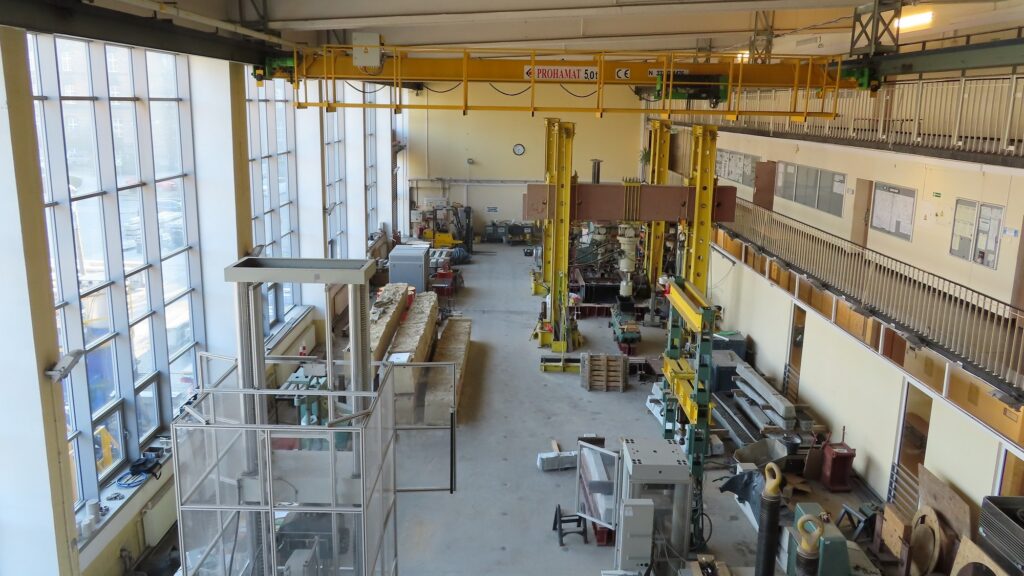
The Laboratory operates in a hall with a usable area of nearly 500 m² equipped with, among other things, a testing stand founded on a reinforced concrete slab capable of bearing large loads, a crane with a lifting capacity of 5 tons, and technical facilities.
Laboratory of Power Machinery and Equipment
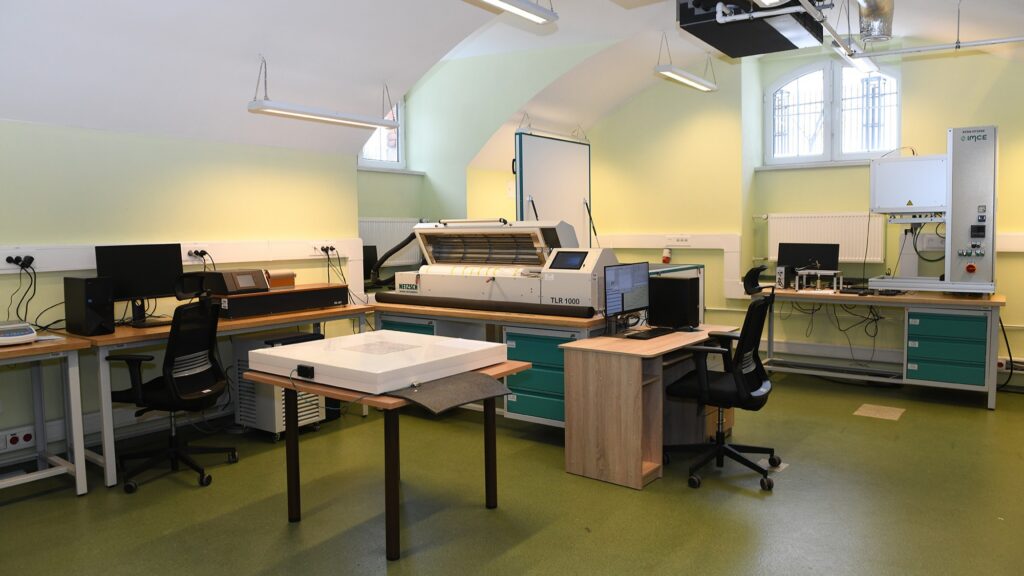
The Accredited Laboratory of Power Machinery and Equipment possesses specialized apparatus and qualified personnel for determining the thermal conductivity of insulating materials of flat shape (apparatus GHP 900 S) and cylindrical shape (apparatus TLR 1000), as well as for determining the temperature and enthalpy of melting and crystallization of plastics (apparatus DSC 214 Polyma).
Scope of accreditation of the Polish Centre for Accreditation No. AB 1882:
• measurement of thermal conductivity of flat objects in the range 0.025 ÷ 0.2 W/(m·K) in the temperature range from -10 to 65°C;
• measurement of thermal conductivity of cylindrical objects in the range 0.025 ÷ 0.1 W/(m·K) in the temperature range: cold side from -15 to 140°C, heated side from 20 to 200°C;
• measurement of temperature and enthalpy of melting and crystallization of plastics in the temperature range from 35 to 450°C.
Outside the scope of accreditation, the Laboratory possesses apparatus for measuring diffusivity, specific heat, Young’s modulus, Kirchhoff’s modulus and Poisson’s ratio, thermal expansion, thermal analysis, composition of flue gases, process gases, and air pollutants by FTIR method, as well as chromatographic analyses using GC/MS, LC-MS/MS, and GC with PDHID detector.
Lab of Technoclimatic Research and Heavy Duty Machines
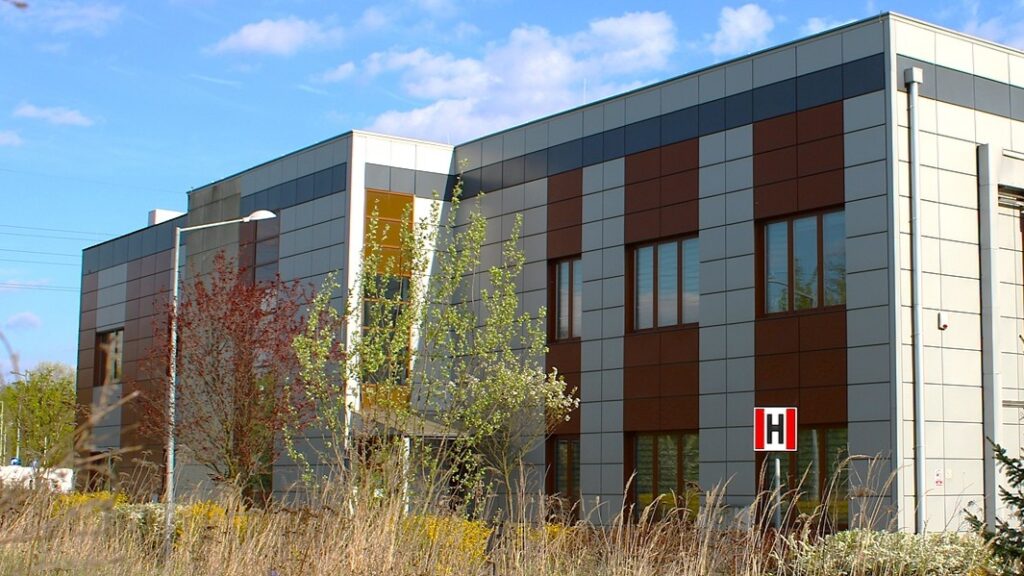
The Laboratory conducts testing of vehicles, equipment, and engineering structures under extreme climatic conditions.
The scope of accreditation No. AB 1678 issued by PCA and accreditation OiB No. 55/MON/2024 granted by MON includes testing of: total resistance to reduced and elevated ambient temperature, resistance to changes in ambient temperature at the rate achievable in the climatic chamber, and resistance to condensation atmospheric deposits (frost and dew).
The Laboratory can also conduct testing outside the scope of accreditation (e.g., tests in elevated humidity up to 98% RH, electrical measurements, vibroacoustic measurements, aging tests, thermovision measurements).
Climatic Chamber Parameters:
• temperature from -51 °C to +71 °C,
• humidity up to 98 % RH,
• test space:
length: 19.4 m,
width: 7.7 m,
height: 8 m.
Accredited Calibration Laboratory
Laboratory of Coordinate Metrology
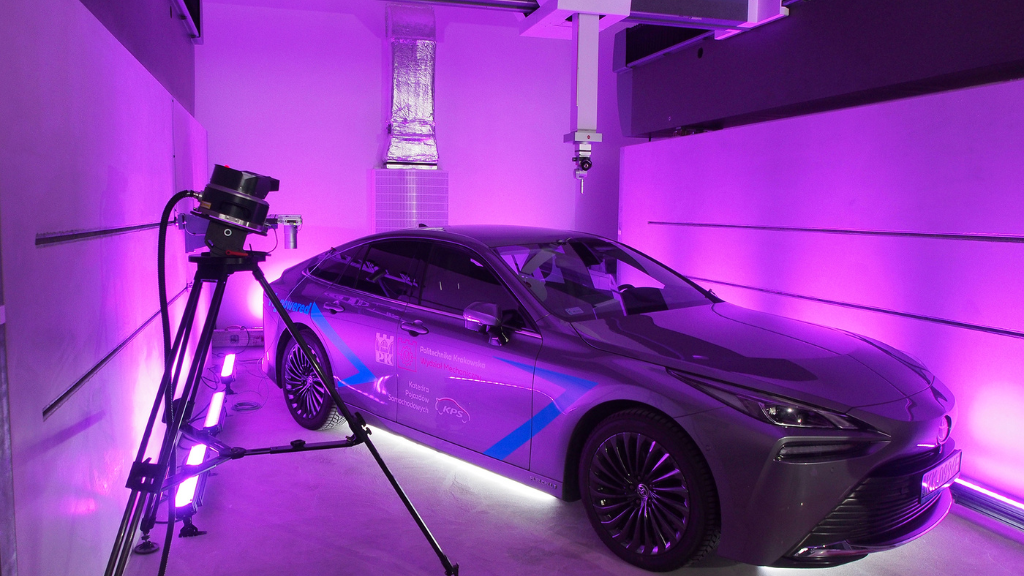
Calibration of Measurement Systems:
• Coordinate Measurement Systems (coordinate measuring machines, contact and optical, coordinate microscopes, measuring arms, laser trackers, structured light and triangulation scanners, photogrammetric systems, etc.)
• Contact and non-contact profilometers (ISO 12179)
• Tomographs
Calibration of geometric characteristics by coordinate methods
(L – length in meters, R – roughness parameter in μm, P – height in μm):
• Length standards (up to 1 m: CMC = 0.12 μm + 0.3 × L μm/m),
• Rings, gauge balls (D ≤ 50 mm: CMC = 0.12 μm,
• Roundness: CMC = 0.05 μm),
• Industrial standards (up to 1 m CMC = 0.6 μm + 0.7 × L μm/m),
• Optical standards for optical CMS
(scales and circles – up to 0.4 m: CMC = 0.6 μm + 0.5 × L μm/m),
• Large-scale elements (CMC = 0.05 mm + 0.06 × L mm/m,
up to 5 m CMC = 1.0 μm + 1.0 x L μm/m)
• Roughness standards (Ra: CMC = (0.03 + 0.015 × R) μm,
Rz: CMC = (0.04 + 0.02 × R) μm),
• Height standards (up to 7 μm): CMC = (0.03 + 0.002 × P) μm.
Measurements:
• Measurements with contact and non-contact coordinate systems,
• Measurements on metrological tomograph,
• Surface analysis,
• 3D scanning with handheld and automated systems.
