PK KUT is Strengthening Education in Critical Technologies
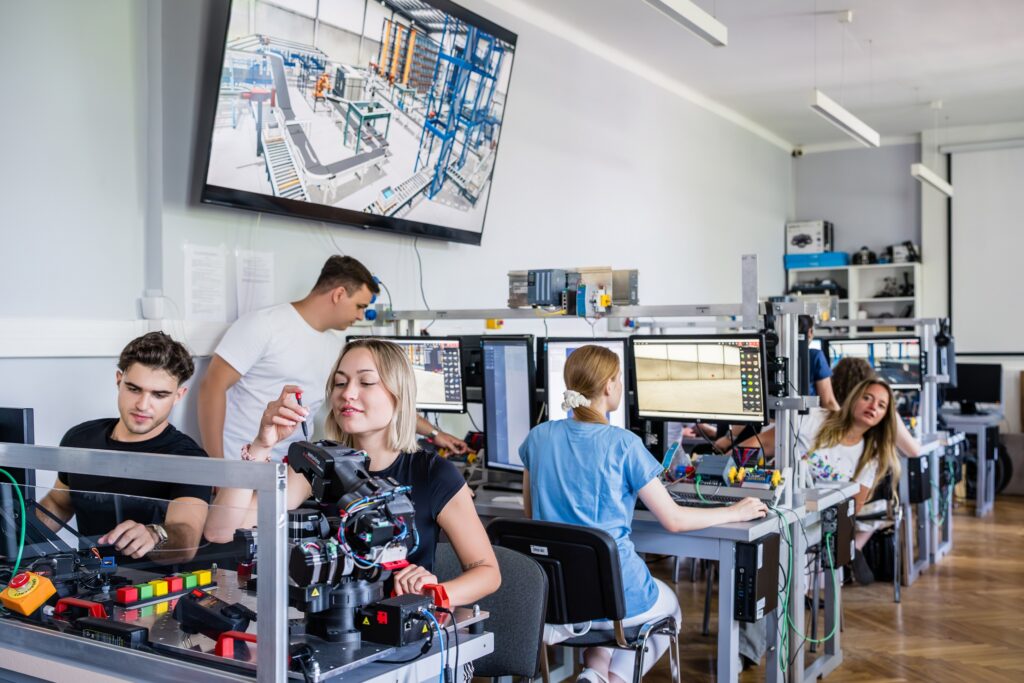
Our University has secured over PLN 5.5 million in EU funding for a new project that will make the curricula of six study programmes and specialisations, strategic for national security and the economy, more attractive and expand them with more practical workshops, internships and training. Students and teaching staff of the following programmes and specialisations will benefit: Electrical Engineering and Automation, Nuclear Power Engineering, Materials Engineering, Industrial Biotechnology, Site Reliability Engineering, and Construction in Nuclear Power Engineering. The University’s partners in the project will be the National Centre for Nuclear Research (NCBJ) and companies and institutions from the socio-economic environment.
PK KUT will conduct the project “PK4STEP – Future Talent for Critical Technologies” under the European Funds for Social Development 2021–2027 programme, co-financed by the European Social Fund Plus. It is aimed at aligning the university’s offer with the needs of economic development and the green and digital transformation. PK KUT’s activities will focus on developing the qualifications and competences of students and teaching staff for critical technology areas. In line with European Commission guidelines, these areas include: digital technologies and innovation within deep tech; clean and resource-efficient technologies; and biotechnologies.
“Thanks to the project, we will modify the second-cycle (master’s) curricula in four programmes: Electrical Engineering and Automation, Nuclear Power Engineering, Materials Engineering and Industrial Biotechnology. We will also create two new master’s specialisations: Site Reliability Engineering in Computer Science, and Construction in Nuclear Power Engineering in Civil Engineering,” says Prof. Katarzyna Bizon, Vice-Rector for Education and International Cooperation.
Support will cover 48 academic teachers and 138 students. “Besides education based on the new curricula, they will benefit from additional forms of support, including training and workshops, study visits and internships,” added the Vice-Rector.
The focus on second-cycle studies reflects the need to prepare highly qualified specialists and technology leaders able to work in advanced critical technologies. The goal is to develop specialised engineering competences that are key to the country’s technological, energy and industrial security and to the resilience of critical infrastructure. “We want to link our curricula even more closely to the needs of the national economy and of Małopolska, a region with a strong industrial, energy, IT and biotechnology base,” added PK KUT Rector Prof. Andrzej Szarata.
As Prof. Katarzyna Bizon pointed out, the key element of the project will be lasting cooperation between PK Krakow Universiyy of Technology and its socio-economic environment, including the National Centre for Nuclear Research, the country’s leading R&D centre in nuclear technologies, which will be involved in modifying the curricula, developing competences, and delivering education in Nuclear Power Engineering and in the Construction in Nuclear Power Engineering specialisations.
“Cooperation with industrial and research partners will keep the curricula up to date, ensure that learning outcomes comply with European regulations, and closely link teaching with industry, R&D and implementation activities,” highlighted Prof. Katarzyna Bizon.
The project PK4STEP – Future Talent for Critical Technologies (agreement no. FERS.01.05-IP.08-0071/26-00), funded under the FERS 2021–2027 programme, has a total value of PLN 5,756,592.60 and will be implemented from 1 October 2026 to 30 September 2029. EU funding amounts to PLN 5,583,892.60. PK KUT will also use part of the funds to upgrade its teaching laboratories.
“Preparing the project and finalising the agreement with the National Centre for Research and Development (NCBR) required exceptional commitment from a team of staff from six faculties and the PK KUT Project Support Centre. I thank them very much. We are also grateful to our partners from the National Centre for Nuclear Research for joining this important project,” concluded Vice-Rector Katarzyna Bizon.